
The Morning It Wouldn't Lift
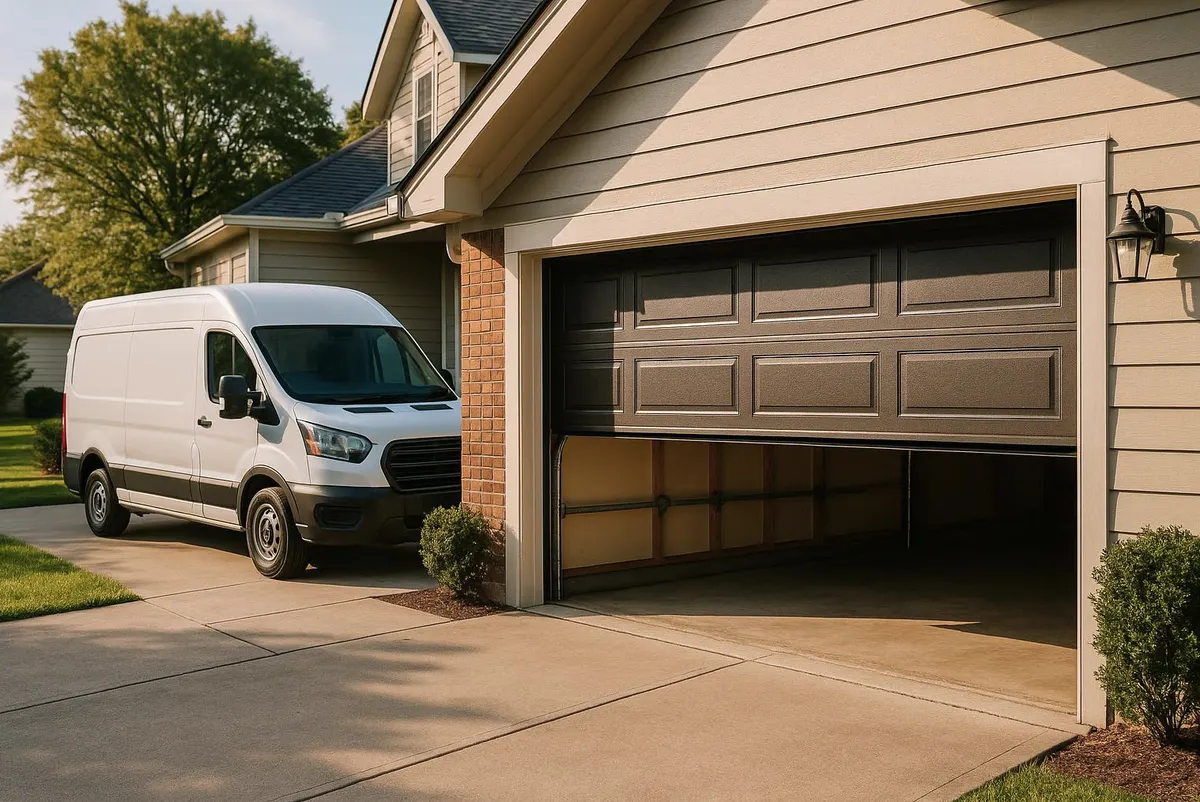
You press the remote and the door jerks an inch off the floor, then stops. The opener motor whines like it's working twice as hard as usual. Or maybe the door looks stuck flat to the slab, like something is holding the bottom edge down. You give it a tug by hand and hear a faint cracking sound as the weatherstripping peels away from the concrete. It's a cold snap morning, the kind that hits Center Hill a handful of times each winter when a front pushes down from the north and the overnight temperature drops into the 30s or 40s. Your garage door, built for Florida heat and humidity, suddenly isn't acting like itself.
What You'll Notice
- The door lifts partially, then stalls — the opener strains, reverses, or trips its safety sensor.
- A cracking or peeling sound at the bottom as the seal releases from the slab.
- Uneven movement — one side of the door rises faster than the other.
- Slower, heavier operation overall, even once the door does move.
- Visible frost, dew, or a thin sheen of moisture on the tracks or bottom seal.
None of this means your door is broken in any dramatic sense. It usually means a part that's been quietly stressed by months of heat and humidity is now reacting to a sudden temperature swing. Here's the order a technician checks things, from most common to least.
1. The Bottom Seal and Weatherstripping
This is almost always the first culprit, and for good reason. Florida's humid nights leave a film of condensation on the garage floor and the rubber seal along the bottom of the door. On an ordinary morning that moisture just evaporates. On a cold-snap morning, it can freeze just enough to glue the seal to the concrete, or the seal itself has already absorbed so much moisture over the summer that it's swollen and tacky, sticking even without ice. The fix: a gentle pry with a plastic scraper (never force the opener to break it loose, that strains the motor and the top panel), followed by replacing a seal that's visibly cracked, soft, or misshapen. A new vinyl seal is inexpensive and worth doing before the next front rolls through.
2. Lubricant That's Gone Stiff
If the seal isn't the problem, the next check is the rollers, hinges, and torsion bar. Standard petroleum-based grease and old spray lubricants thicken in cooler temperatures, and in a garage that's been baking all summer, residue and grime can build up right alongside it. The combination turns smooth rollers into sluggish ones. The fix: cleaning off the old buildup and reapplying a silicone or lithium-based garage door lubricant rated for a range of temperatures, not a general-purpose household oil that gums up fast in humidity.
3. Spring Tension Changes
Metal contracts slightly in the cold, and a torsion spring that's already fatigued from a Florida summer of heat expansion and humidity swings can feel noticeably different when the weather flips. This often shows up as a door that's heavier than normal to lift by hand, or an opener that strains on the first cycle of the day and loosens up afterward. The fix: this is not a do-it-yourself adjustment. Torsion springs are under enormous tension, and a technician will check the wind count and tension against the door's weight rating before touching anything.
4. The Opener's Circuit Board and Sensors
Cold combined with humidity is tough on electronics. Moisture can condense inside the opener housing or on the safety-sensor eyes near the floor, causing the door to reverse partway through its cycle or refuse to respond at all. The fix: wiping down the sensor lenses, checking the housing for condensation, and in persistent cases, having the force and travel limits recalibrated.
5. Track Alignment and Rust
Salt air and moisture are a slow, steady enemy for steel tracks, especially on properties closer to the coast or with sprinklers that hit the garage wall. A cold morning can make a rust-roughened track grab a roller that would otherwise glide past the rough spot in warmer weather. The fix: cleaning rust spots, checking track alignment with a level, and replacing sections that have pitted enough to catch rollers repeatedly.
6. Cables and Anchor Points
Last on the list, but worth checking if the door is moving unevenly rather than just slowly: cables that have started to fray or rust at their anchor brackets can bind under the added resistance of a stiff, cold morning. The fix: cable inspection and replacement if any fraying is visible, since a cable that lets go under tension is a safety hazard, not just an inconvenience.
When to Call Center Hill Door & Opener
If your door is sticking at the bottom seal, a quick DIY check and a new weatherstrip might solve it. But if the opener is straining, the door moves unevenly, or you hear a heavier-than-usual creak from the torsion spring area, that's the point to call in a technician rather than keep cycling the opener and risking a bigger failure. We offer a Garage Door Maintenance & Tune-Up that catches exactly this kind of seasonal stiffness before it turns into a stuck door at 6 a.m., and if the issue turns out to be spring tension, our Garage Door Spring Repair service handles it safely with the right tools and parts for your door's weight.
If your garage door is giving you trouble this cold snap, call Center Hill Door & Opener today. We serve Center Hill, Webster, Bushnell, Wildwood, Coleman, Sumterville, Lake Panasoffkee, and The Villages, and we'll get your door moving smoothly again before the next front comes through.