
Rule of thumb: if your garage door ran quietly and opened smoothly through hurricane season, it only needs a seasonal once-over, not a repair. The exceptions are doors that took a beating from storm winds, sat through months of humidity without any attention, or have started making new noises in the last few weeks. Those need a closer look before winter settles in.
Why Late Fall Is the Right Time to Check
Hurricane season officially winds down by the end of November, which means your garage door has spent months absorbing humidity, wind gusts, and the occasional pressure swing from storms passing through. At the same time, Central Florida is heading into its dry season, with lower humidity, cooler nights, and far less rain than the summer brought. That shift matters for a garage door. Materials that swelled with moisture all summer start to dry out and contract. Lubricant that worked fine in July can thicken slightly on cooler nights. And any wear that storms caused over the summer tends to show up now, once the daily stress of heat and rain lets up.
Inspect the Hardware Storms Stress Most
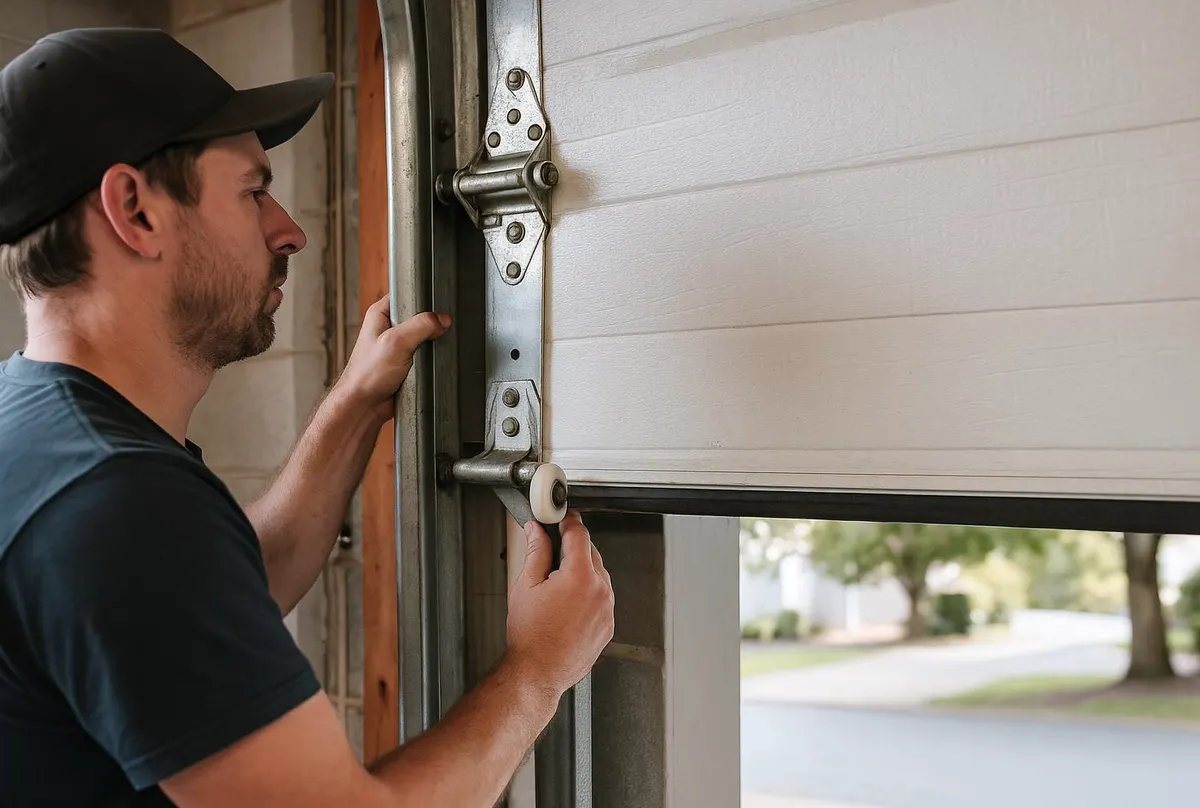
Garage doors in this area are built to local wind-load standards, but that doesn't mean the hardware is maintenance-free. Walk the track, rollers, and the bracket where the door's struts attach to the frame. Look for:
- Bent or dented track sections from wind-driven debris
- Loose lag screws or hinges, especially near the top panel where wind pressure hits hardest
- Rust starting on springs, cables, or hinges after months of humid air
- Cracked or torn weatherstripping along the bottom seal, which absorbs a lot of punishment during storm season
If you notice the door has pulled away from the wall slightly, or the struts look warped, don't wait. That's a sign the door took more wind load than it should have, and it's worth having someone check before it becomes a bigger structural issue.
Weatherstripping and Seals: Expect Some Shrinkage
Rubber seals around the bottom and sides of the door swell slightly in heat and humidity, then shrink back as drier air moves in. That's normal, but it also means gaps that weren't noticeable in August can show up in December. Run your hand along the bottom seal on a sunny afternoon. If you feel daylight gaps or see the rubber pulling away from the track, it's an easy, inexpensive fix now rather than a bigger gap letting in cool drafts, dust, or the occasional curious lizard later in the season.
Lubrication After a Humid Summer
If your door has gone all summer without fresh lubricant, humidity has likely washed away or thinned whatever was applied last. Before cooler nights set in, give the rollers, hinges, and springs a fresh coat of a silicone-based lubricant made for garage doors. Avoid WD-40 as a long-term lubricant; it's a good cleaner but evaporates quickly and won't hold up well once temperatures start swinging between warm afternoons and cool nights.
Check the Opener and Battery Backup
Cold fronts moving through Central Florida in winter can still bring strong wind and rain, even outside of official hurricane season. If your opener has a battery backup, test it now rather than during the next power blip. Listen for the opener straining, grinding, or taking longer than usual to lift the door. A motor working harder than it should is often an early sign that springs are losing tension, not that the opener itself is failing.
Rust Spots Are Easier to Catch Now
Months of humid air, especially with any salt influence carried inland from coastal storms, can start small rust spots on springs, cables, and hardware. These are much easier to treat now, while they're surface-level, than after another few months of exposure. A light wipe-down with a rust-inhibiting spray on exposed metal parts goes a long way toward preventing a cable from fraying or a spring from weakening prematurely.
Plan for More Door Cycles
Holiday visitors, extra deliveries, and more time spent working in the garage during cooler, more comfortable weather all mean your door will open and close more often over the next couple of months. A door that was borderline noisy or slow in October will likely get worse under that added use. This is a good window to address small issues before they turn into a stuck door right when you have company coming.
When to Call Center Hill Door & Opener
If you've spotted rust on the springs, a cable that looks frayed, a door that's slow to respond, or hardware that shifted during a storm, it's worth having a technician take a look rather than guessing. Our Garage Door Maintenance & Tune-Up service covers exactly this kind of seasonal check: tightening hardware, inspecting cables and springs, adjusting the opener's force settings, and replacing worn weatherstripping. If a spring already looks stretched, rusted, or uneven compared to the other side, our Garage Door Spring Repair service handles that safely, since springs are under heavy tension and not something to tackle solo.
If your garage door needs a pre-winter check, give Center Hill Door & Opener a call. We serve Center Hill, Webster, Bushnell, Wildwood, Coleman, Sumterville, Lake Panasoffkee, and The Villages, and we're happy to get your door ready for the season ahead.